Optimizing Commercial AC Installation for Efficiency and Comfort
Embarking on the journey of commercial AC installation, we delve into the crucial aspects that make a difference in your commercial space. From proper installation to system types, we cover it all in this comprehensive guide.
Exploring the factors that influence the installation process and the common challenges faced, this guide equips you with the knowledge needed for a successful commercial AC installation.
Overview of Commercial AC Installation

Proper installation of commercial air conditioning systems is crucial for maintaining a comfortable and productive indoor environment in commercial settings. Unlike residential AC units, commercial systems are designed to cool larger spaces and accommodate a higher number of occupants, making their installation more complex.
Key Differences Between Residential and Commercial AC Installation
- Size: Commercial AC systems are much larger in size compared to residential units to handle the cooling needs of large commercial spaces.
- Complexity: Commercial installations involve more intricate ductwork, zoning systems, and controls to ensure efficient cooling throughout the building.
- Regulations: Commercial installations must adhere to specific building codes and regulations set by authorities to ensure safety and compliance.
Typical Size and Complexity of Commercial AC Systems
Commercial AC systems can vary in size depending on the square footage of the building and the number of occupants. They typically consist of multiple indoor and outdoor units connected through a network of ducts to provide uniform cooling. These systems often require advanced controls and monitoring systems to maintain optimal performance.
Factors to Consider Before Installation

Before installing a commercial AC system, there are several important factors to consider to ensure optimal performance and efficiency.
Identify the Necessary Cooling Capacity
Determining the appropriate cooling capacity of the commercial AC system is crucial for maintaining a comfortable indoor environment. This calculation is based on the size of the commercial space, measured in square footage. Oversized units can lead to excessive energy consumption and inefficient operation, while undersized units may struggle to cool the space adequately.
- Calculate the square footage of the commercial space to determine the BTU (British Thermal Units) required for efficient cooling.
- Consult with HVAC professionals to accurately assess the cooling needs of the space and choose a system with the appropriate capacity.
Importance of Energy Efficiency
Energy efficiency is a key consideration when selecting a commercial AC system, as it can significantly impact operating costs and environmental sustainability. Choosing an energy-efficient system not only reduces utility bills but also minimizes the carbon footprint of the business.
- Look for systems with high SEER (Seasonal Energy Efficiency Ratio) ratings, which indicate superior energy efficiency.
- Consider investing in variable refrigerant flow (VRF) systems or other advanced technologies that optimize energy usage.
Significance of Proper Ventilation and Ductwork Design
Proper ventilation and ductwork design are essential components of an efficient commercial AC system. Inadequate ventilation can lead to poor indoor air quality and uneven temperature distribution, while poorly designed ductwork can restrict airflow and reduce system performance.
- Ensure that the commercial space has sufficient ventilation to allow for proper air circulation and ventilation.
- Work with HVAC professionals to design and install ductwork that is optimized for airflow and efficiency, minimizing energy waste.
Types of Commercial AC Systems

Commercial spaces have different requirements when it comes to air conditioning systems. Here, we will discuss the various types of commercial AC systems commonly used in different commercial settings.
Rooftop Units vs. Split Systems
Rooftop units and split systems are two common types of commercial AC systems. Rooftop units are typically placed on the roof of a building and are self-contained, providing both heating and cooling. Split systems, on the other hand, consist of indoor and outdoor units connected by refrigerant lines.
- Rooftop Units:
- Convenient for space-saving as they are installed on the roof
- Easy access for maintenance and repairs
- Cost-effective for larger commercial spaces
- Split Systems:
- Allow for zoning to control temperature in different areas
- Flexibility in installation as indoor units can be placed in various locations
- Energy-efficient operation
Variable Refrigerant Flow (VRF) Systems
Variable refrigerant flow (VRF) systems are gaining popularity in commercial settings due to their energy efficiency and precise temperature control. These systems use refrigerant to heat or cool spaces and can adjust the flow of refrigerant to meet the specific requirements of each area within a building.
VRF systems offer simultaneous heating and cooling, allowing for better comfort and energy savings.
Ductless Mini-Split Systems
Ductless mini-split systems are ideal for specific commercial applications where ductwork is not feasible or desirable. These systems consist of an outdoor unit connected to one or more indoor units, providing targeted heating and cooling to individual spaces.
- Benefits of Ductless Mini-Split Systems:
- Easy installation without the need for ductwork
- Energy-efficient operation with the ability to control temperature in different zones
- Quiet operation compared to traditional HVAC systems
Installation Process and Best Practices

When it comes to installing a commercial AC system, there are several key steps that need to be followed to ensure optimal performance. Proper sizing and placement are crucial, as well as regular maintenance post-installation.
Steps in Installing a Commercial AC System
- Site Assessment: Conduct a thorough assessment of the site to determine the best location for the AC unit.
- Ductwork Installation: Ensure that the ductwork is properly installed to maximize airflow and efficiency.
- Electrical Wiring: Proper electrical wiring is essential for the safe and effective operation of the AC system.
- Unit Installation: Carefully install the AC unit according to manufacturer guidelines to avoid any issues.
- Testing and Commissioning: Test the system to ensure it is working correctly before commissioning it for regular use.
Importance of Proper Sizing and Placement
Proper sizing and placement of commercial AC units are crucial for efficiency and performance. An undersized unit will struggle to cool the space, while an oversized unit can lead to short cycling and increased energy consumption. Additionally, placing the unit in the right location ensures even cooling throughout the space.
Significance of Regular Maintenance
- Filter Replacement: Regularly replace filters to maintain air quality and system efficiency.
- Coil Cleaning: Clean coils to prevent dirt buildup and ensure optimal heat transfer.
- Check Refrigerant Levels: Insufficient refrigerant can lead to poor cooling performance and higher energy bills.
- Inspect Ductwork: Ensure ductwork is clean and free of leaks to maintain airflow and efficiency.
Common Challenges and Troubleshooting
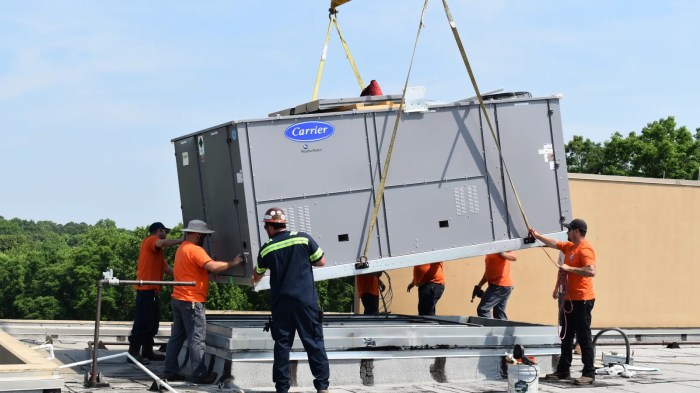
When it comes to commercial AC installations, there are several common challenges that may arise during the process. It is essential to be prepared for these issues and know how to troubleshoot them effectively to ensure a successful installation.
Power Supply Problems
One of the most common challenges during commercial AC installations is power supply issues. Inadequate power supply or electrical wiring problems can lead to AC units not functioning correctly. It is crucial to check the power source and ensure it meets the requirements of the AC system.
Troubleshooting power supply problems may involve checking the circuit breaker, voltage levels, and connections to identify and resolve any issues.
Ductwork Design and Installation
Another challenge in commercial AC installations is related to ductwork design and installation. Improperly sized or installed ductwork can lead to inefficient cooling and airflow problems. Troubleshooting ductwork issues may require inspecting the ducts for leaks, blockages, or damage. Proper sealing and insulation of ductwork are essential to ensure optimal performance of the AC system.
Refrigerant Leaks
Refrigerant leaks can also pose a significant challenge during commercial AC installations. Leaks in the refrigerant lines can result in reduced cooling capacity and system inefficiency. Troubleshooting refrigerant leaks involves identifying the source of the leak, repairing or replacing damaged components, and recharging the system with the correct amount of refrigerant.
It is crucial to address refrigerant leaks promptly to prevent further damage to the AC system.
Complex System Integration
Commercial AC installations often involve complex system integration with other building systems, such as HVAC controls, ventilation, and building automation. Coordinating the installation and integration of these systems can be challenging and may require troubleshooting compatibility issues, communication protocols, and programming errors.
It is essential to work closely with other contractors and technicians involved in the project to ensure seamless integration and operation of the entire system.
Compliance and Regulations

When it comes to commercial AC installations, there are specific regulatory requirements that must be followed to ensure the safety and efficiency of the systems. Compliance with industry standards and codes is crucial to avoid any potential hazards and ensure the longevity of the equipment.
Regulatory Requirements
Commercial AC installations are subject to various regulations set forth by local, state, and federal authorities. These regulations cover aspects such as the size and type of system, electrical connections, refrigerant handling, and environmental considerations.
Importance of Compliance
- Ensures safety for occupants and workers
- Prevents costly fines and penalties
- Promotes energy efficiency and environmental sustainability
Permits and Inspections
Before conducting a commercial AC installation, permits are typically required to ensure that the installation meets all regulatory standards. Additionally, inspections may be necessary during and after the installation process to verify compliance and safety.
Wrap-Up

In conclusion, ensuring a seamless commercial AC installation involves attention to detail, adherence to regulations, and regular maintenance. By following best practices and understanding the intricacies of commercial systems, you can create a comfortable and efficient environment for your business.
Commonly Asked Questions
What is the importance of proper ventilation in commercial AC installation?
Proper ventilation ensures efficient air circulation and helps maintain indoor air quality, crucial for a healthy and comfortable environment.
What are the benefits of variable refrigerant flow (VRF) systems in commercial settings?
VRF systems offer energy efficiency, individual zone control, and quiet operation, making them ideal for commercial spaces with varying cooling needs.
What permits and inspections are needed for commercial AC installations?
Permits and inspections vary by location, but generally, you need to comply with building codes and have your system inspected to ensure safety and compliance.